
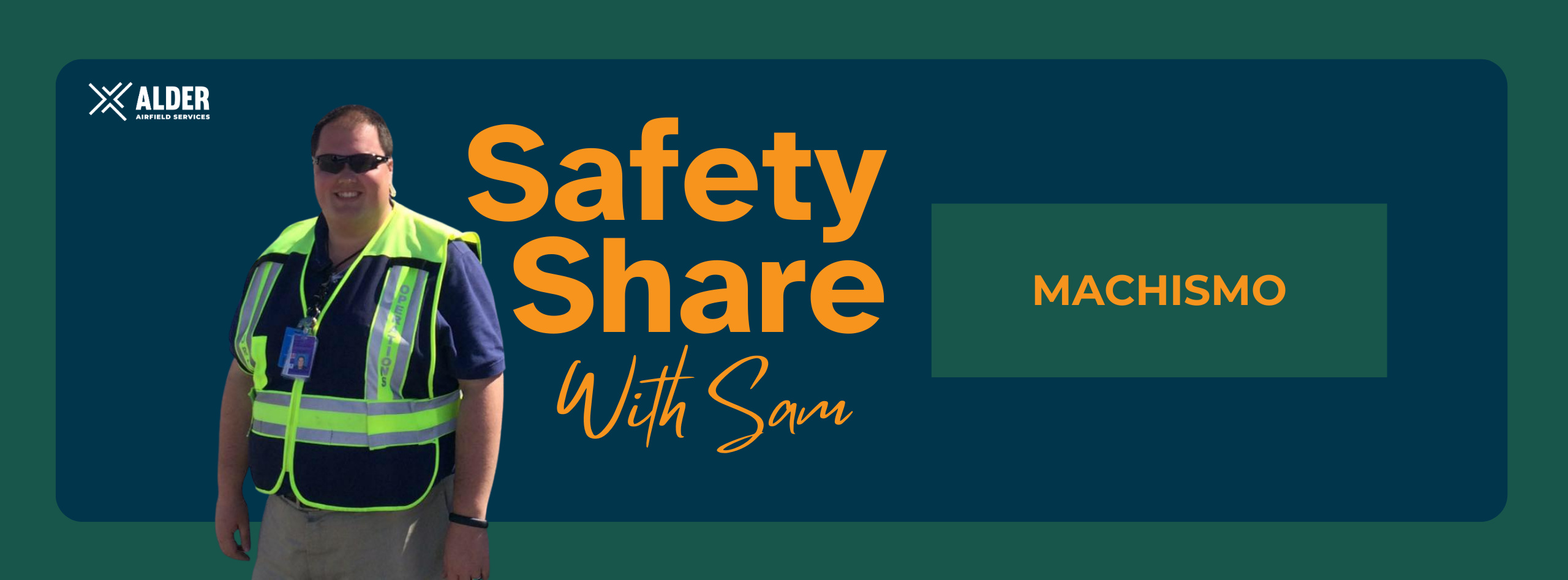
By Samuel Allen, C.M., ACE
Airport Operations Manager
Macho attitudes are prevalent in the modern world.
An extension of the “Look mom, no hands!” philosophy has ebbed and flowed throughout pop culture to the beat of many different generational drums.
Macho attitudes are also rampant in the aviation and construction industries— and both career fields are full of Type A personalities who like to show what they can do.
Perhaps unlike previously discussed Hazardous Attitudes, macho thinking can prove itself to be more insidious and harder to detect since one professional’s confidence can be another person’s arrogance.
The FAA defines the macho hazardous attitude in the Pilot’s Handbook of Aeronautical Knowledge as “…[people] who are always trying to prove that they are better than anyone else think, ‘I can do it – I’ll show them.’ [Individuals] with this type of attitude will try to prove themselves by taking risks in order to impress others.”
The handbook goes on to describe that while machismo is thought to be a male characteristic, “women are equally susceptible.”
Fear of showing weakness. More so than just an individual’s influence over a group, a macho workplace culture often discourages individuals from speaking up for fear of showing vulnerability or weakness. Whether it’s about perceived hazards, admitting uncertainty, or asking for help, a culture that supports a macho perspective on the work and on the project hinders progress. Workers would likely feel pressured to exude confidence, even when unsure about things both great and small.
Lack of humility. On an airfield, a macho approach can lead to much more than simply a damaged piece of equipment or workplace injury. Without mental checks and balances that accompany humility and caution, driving across the wrong marking or walking close to the wrong aircraft can lead to deadly serious incidents, particularly when adjacent to runways, taxiways, and active ramps where the very aircraft that a project/airport is supporting often becomes its most punishing hazard.
Fatigue management. Fatigue management is another area often affected by macho attitudes. Workers may push beyond safe physical limits to meet deadlines or over-the-top self-imposed goals, increasing the risk of errors and accidents. Overexertion, reduced focus, and slower reaction times can compromise both the individual and team.
How do we fix and prevent macho attitudes on the AOA?
Addressing this issue requires more than just strong leadership and a cultural shift. The main concern with addressing a macho attitude is the very thing that makes it a difficult attitude to detect since it is often missed as a possibility that it is simply the way that a particular individual displays their confidence.
Training programs and the leadership that implements them should emphasize professionalism that includes recognizing limits, following procedures, and looking out for one another when on the airfield.
Even though the Village People make being a “Macho Man” sound fun, it should remain a priority throughout the aviation industry, airport operations, and construction management to filter out attitudes such as these for the safety of all workers and users of the airport system.
Samuel Allen, C.M., ACE
Airport Operations Manager